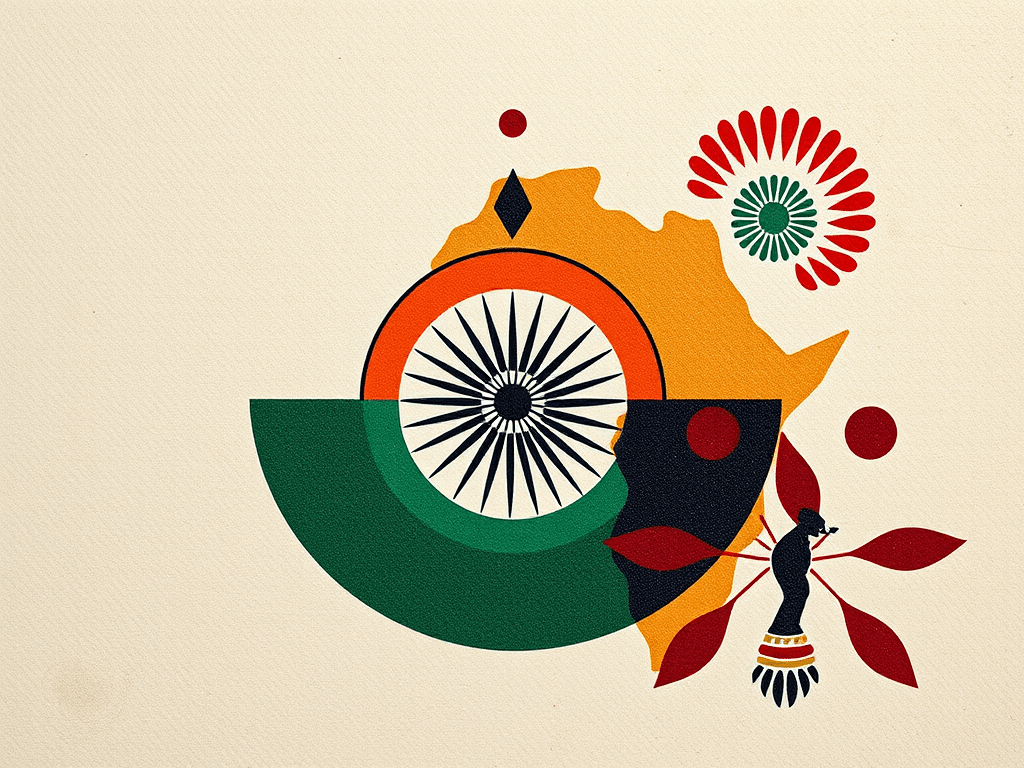
A student of International Relations, my interest in Asia-Africa interactions began in the summer of 2011, when I started work on my graduate thesis contrasting Indian and Chinese investments in the extractive sector of select African countries. This grew into a Doctoral dissertation examining the Resource Diplomacy Strategies of India and China in Africa. Over a decade later, the subject remains fascinating.
Building on the thesis and dissertation, I spent a few years post-PhD creating an Africa research vertical at the ICS, designing projects examining these interactions, with a focus on building partnerships with African researchers and institutions, and conducting extensive fieldwork, interviewing a range of stakeholders at the grassroots.
This included Infrastructure development in Tanzania and Kenya, Manufacturing in Ghana and Ethiopia, Agriculture cooperation in Zambia, Mining and Financial Services in Zimbabwe. The effort has been to gather diverse perspectives, conduct evidence-based research that bridges the academic research–development practitioner work gap.
While I am trained to analyze interactions between countries, my interest extends to the role of subnational actors including the individual in shaping these engagements. A paper explaining state behavior from the point of view of an Indian farmer in Kenya and a Chinese contractor in Tanzania titled ‘Reimagining Engagement and Realigning Priorities: How India and China are Informing the African Growth Story‘, won the World Society Foundation Research Award in Switzerland in April 2019.
During my time as a 2022-23 Fung Global Fellow at Princeton University, I began work on my first book. It foregrounds ideas at the intersection of two contemporary phenomena. One, the entry of new actors in the international relations of the Global South: individual entrepreneurs, small and medium scale enterprises, provincial governments, corporations, civil society organizations, and artists from Asia and Africa who are interacting at a pace and scale unlike ever before. Two, the ongoing evolution of the global development landscape, where traditional instruments of lending and aid are being reimagined with sustainable, innovative, scalable interventions that utilize technology and evidence-based research, to address shared challenges.
In addition to research, I have a book of narrative essays taking form, and when I am not traveling, meandering through a museum, listening to stand-up comedians or local bands, you can find me engrossed in a conversation with my army of nieces and nephews.
 Veda Vaidyanathan